How to Relieve Desk Stiffness Without Pushing Through

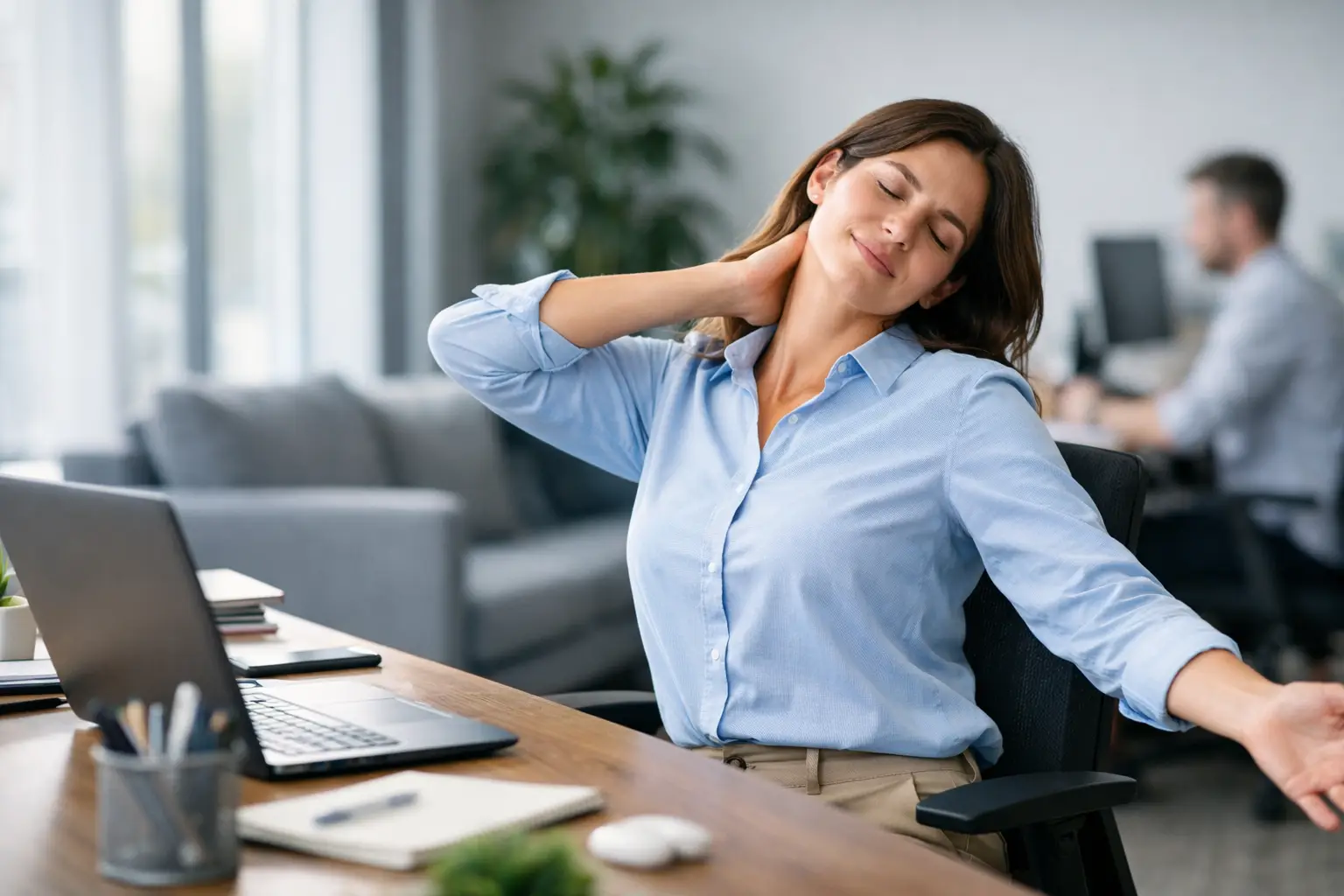
Your shoulders creep toward your ears during a deadline. Your low back feels locked when you stand up for coffee. By late afternoon, turning your head to check traffic on the drive home feels surprisingly difficult. These are familiar signs that your body has spent too long holding one working position. To relieve desk stiffness, the answer is rarely one dramatic stretch at the end of the day. It is a steady combination of movement, better support, and care for the areas doing the most compensating.
Desk work is not inherently harmful. The challenge is duration. Even a well-arranged workstation can become uncomfortable when your body is asked to stay still for hours. Muscles that stabilize your head, shoulders, hips, and spine begin to work overtime, while other tissues receive less movement and circulation than they need. The result can be tightness, achiness, reduced range of motion, headaches, or that heavy, compressed feeling that makes relaxation difficult after work.
Why Desk Stiffness Builds Up
Many people blame their chair, and ergonomics do matter. But stiffness usually comes from more than one source. A screen that sits too low may encourage a forward head position. A laptop keyboard can pull the shoulders inward. Crossing the legs, leaning toward one armrest, or reaching for a mouse all day can create small, repeated imbalances.
Stress adds another layer. When concentration is high or the day feels rushed, it is common to brace through the jaw, neck, upper back, and hips without realizing it. Your body treats emotional pressure as physical work. A perfectly positioned chair cannot fully offset a nervous system that has been in “go” mode since breakfast.
There is also no single ideal posture to hold all day. The most supportive posture is one you change regularly. Rather than trying to sit perfectly, aim to create a workstation that makes neutral alignment easier, then give your body frequent opportunities to move.
How to Relieve Desk Stiffness During the Workday
Start by making the easy adjustments. Place your screen near eye level so you are not constantly looking down. Let your feet rest on the floor or on a stable footrest, and position the keyboard so your elbows can stay close to your sides. If you work from a laptop, a separate keyboard and mouse can make a meaningful difference. These changes are not about creating a picture-perfect desk. They reduce the number of small compensations your body has to make.
Then, build movement into work instead of treating it as something reserved for the gym. A brief reset every 30 to 60 minutes is more helpful than waiting until discomfort becomes intense. Stand for a call, walk to refill your water, or take a few calm breaths while letting your arms hang naturally at your sides. The goal is not to interrupt your productivity. It is to keep tension from becoming your body’s default setting.
A simple four-part reset can be done beside your desk in less than two minutes:
- Slowly roll your shoulders up, back, and down several times.
- Turn your head gently right and left, stopping before any pinching or strain.
- Stand tall and reach your arms overhead, breathing into the sides of your ribs.
- Shift your weight from one foot to the other or take a short walk to wake up your hips and legs.
Move slowly enough to notice what feels restricted. If one shoulder always feels higher, your neck turns more easily in one direction, or your hips feel uneven when you stand, those patterns are useful information. They can point to areas that need more focused attention than a general stretch can provide.
Give Your Neck and Shoulders a Different Job
The neck and shoulders often become the visible victims of desk work, but they are frequently compensating for what is happening below them. When the mid-back is rounded and the chest feels restricted, the upper trapezius muscles may work hard to hold the head up. When the shoulder blades lack support, the neck tends to step in.
Try not to attack tight muscles aggressively. Pulling hard on a sensitive neck or forcing a deep stretch can leave the area more guarded. Instead, begin with gentle movement. Bring your shoulder blades lightly back and down as if you are widening your collarbones, then relax. Repeat a few times without squeezing. Follow that with a slow chest-opening stretch in a doorway or by clasping your hands loosely behind your back.
Your breathing pattern matters here, too. Shallow breathing can keep the upper chest, jaw, and shoulders engaged. Take several unhurried breaths that allow your ribs to expand in all directions. A longer exhale can help signal that it is safe for the body to soften. This is a small practice, but it is especially valuable before a meeting, after a stressful email, or during the transition from work to home.
Do Not Forget the Hips, Glutes, and Lower Back
Sitting shortens the front of the hips for long periods, while the glutes do less of the work they are designed to do during standing and walking. When you rise from your chair, the lower back may take over. That is one reason desk stiffness can feel like a low-back issue even when the hips are contributing to the pattern.
A few moments of standing can help. Try a gentle hip flexor stretch by stepping one foot behind you and shifting forward slightly while keeping your torso upright. Avoid pushing into a sharp sensation in the front of the hip or low back. A short walk is often even better because it invites the hips, glutes, ankles, and core to coordinate naturally.
After work, choose movement that feels restorative rather than punishing. A walk around the neighborhood, light mobility work, or a comfortable floor stretch can help your body transition out of the seated position. If you have been sitting all day, an intense workout may feel good for some people, but it is not the only answer. On a particularly stressful day, gentler movement may serve you better.
When At-Home Care Is Not Enough
Self-care is valuable, yet recurring stiffness deserves a closer look when it keeps returning despite your efforts. If you regularly wake with neck tension, experience reduced motion, notice one-sided discomfort, or feel like your muscles immediately tighten again after stretching, there may be a larger postural or movement pattern involved.
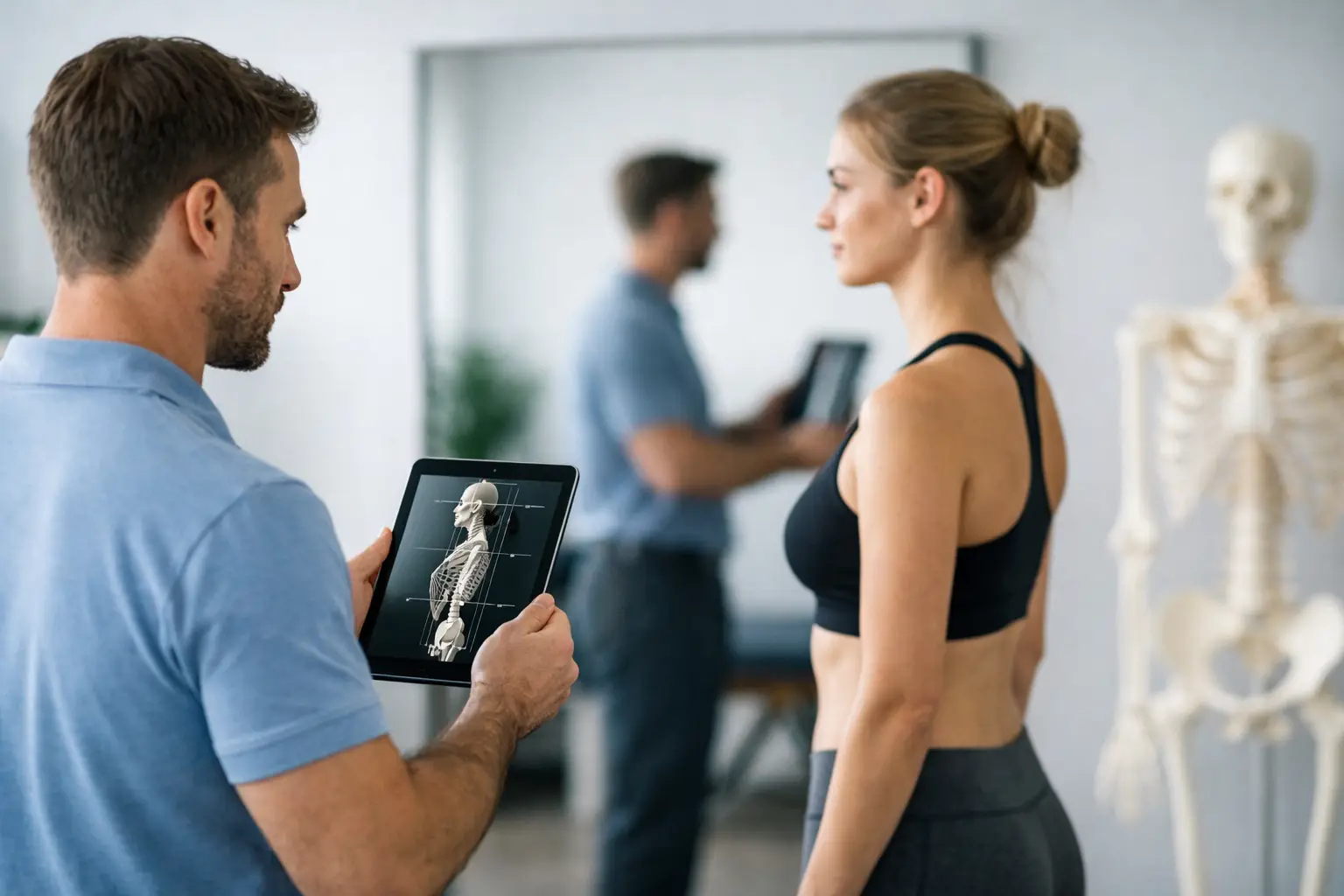
Personalized therapeutic massage can help address the tissues that are overworking while supporting areas that are underactive or restricted. Techniques such as trigger point treatment, positional release work, and focused massage may be selected based on how your body is responding rather than applied as a one-size-fits-all routine. Posture-focused assessment can also reveal habits and asymmetries that are difficult to notice at your own desk.
At Golden Healing in Argyle, care can be tailored for clients who want more than temporary relaxation. A session may focus on the neck, shoulders, hips, low back, or the connected patterns between them, while still creating the calm nervous-system reset busy professionals often need. For some people, occasional care paired with daily movement is enough. For long-standing tension or more complex postural patterns, a series of sessions may be more appropriate.
Seek prompt medical guidance for severe or sudden pain, weakness, numbness, tingling, pain after an injury, unexplained swelling, or symptoms that travel down an arm or leg. Massage and mobility practices can be supportive, but they should not replace medical evaluation when concerning symptoms are present.
Make Relief Part of Your Routine
The most effective plan is the one you can repeat on a busy Tuesday. Adjust your workspace enough to reduce strain, move before you feel desperate to move, and pay attention to the places where tension returns. Think of your body as asking for variety, not perfection.
A few intentional minutes between tasks can change how you feel at the end of the day. When stiffness has already become a familiar companion, skilled hands-on care can offer the space to unwind, restore movement, and reconnect with a body that feels more comfortable to live in.
Popular Posts